Adaptive Recommendation Engines in Digital Casinos: Deposit Histories and Session Lengths Shape Game Suggestions
Wendy Hughes · Aug 6, 2026
Adaptive Recommendation Engines in Digital Casinos: Deposit Histories and Session Lengths Shape Game Suggestions
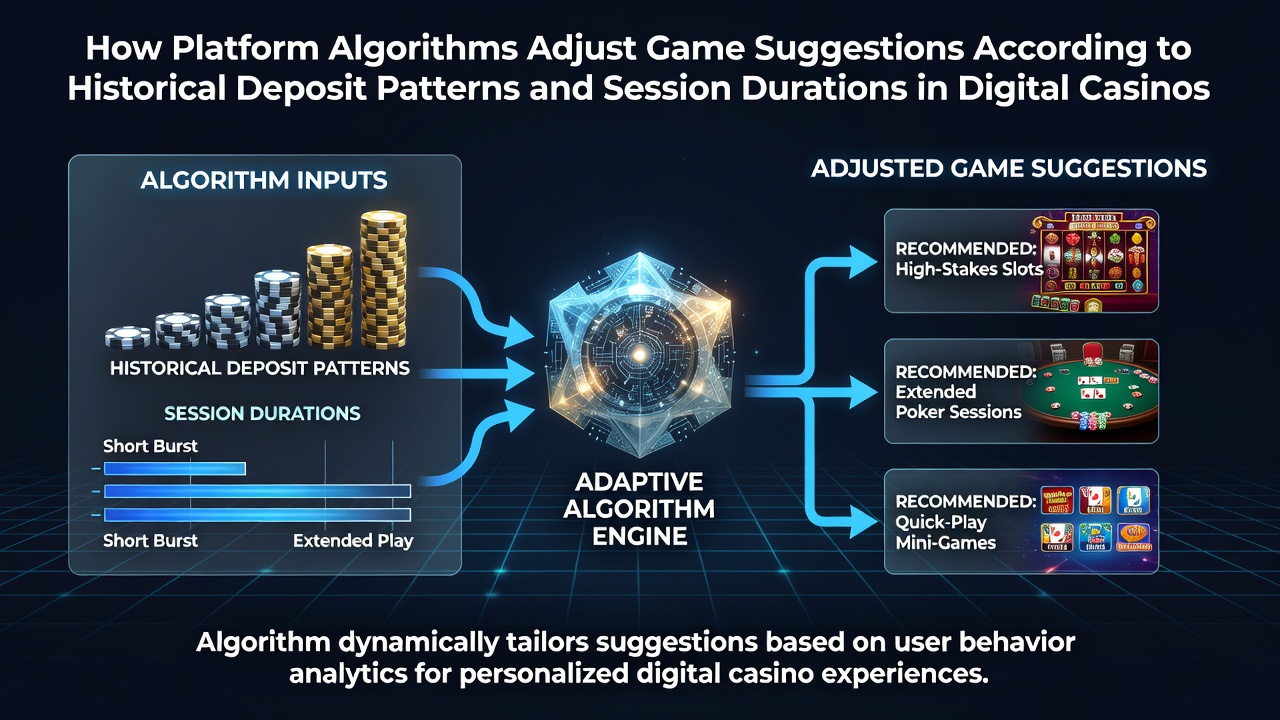
Platform algorithms in digital casinos process historical deposit patterns alongside session durations to refine game suggestions, and data from multiple operators shows these systems update recommendations in real time as users complete deposits or extend play periods. Operators track metrics such as average deposit frequency, amount ranges, and time spent per session, then feed that information into machine learning models that predict preferred game categories.
Data Inputs That Drive Adjustments
Algorithms categorize deposit behaviors into segments including frequent small deposits, occasional larger amounts, and irregular high-value transfers, while session duration data breaks down into short bursts under fifteen minutes, moderate periods between thirty and ninety minutes, and extended sessions exceeding two hours. These inputs combine with game-type engagement rates to generate suggestion lists that shift daily or even hourly. Reports compiled through August 2026 indicate that platforms using combined deposit and duration signals achieved measurable lifts in user retention compared with systems relying on single metrics alone.
One operator in the United States documented how users with repeated deposits under fifty dollars and sessions averaging forty minutes received increased prompts for low-stakes slot titles, whereas those with larger but less frequent deposits and longer sessions saw more table game and live dealer options appear in their feeds. The same report noted that cross-referencing both data streams reduced irrelevant suggestions by approximately eighteen percent over a six-month window.
Technical Mechanisms Behind Personalization
Recommendation engines employ collaborative filtering techniques that compare an individual user's deposit and session profile against anonymized clusters of similar accounts, then apply content-based rules that match game volatility levels to observed play lengths. When a user extends a session beyond their historical average, the algorithm often introduces higher-volatility titles that require sustained attention. Conversely, short sessions paired with steady small deposits trigger suggestions for quick-spin mechanics and bonus rounds designed for brief interactions.

According to findings released by the New Jersey Division of Gaming Enforcement, operators must maintain audit logs of how recommendation logic incorporates financial and behavioral data, and those logs reveal that session-duration thresholds often serve as triggers for re-ranking suggestion priority lists. A separate academic analysis from the University of Nevada, Las Vegas examined similar systems and confirmed that models trained on both deposit velocity and cumulative session time outperformed single-variable approaches in predicting next-game selection.
Regional Implementation Patterns
Platforms licensed in multiple jurisdictions apply different weighting schemes to the same data points depending on local regulatory requirements, and European operators frequently emphasize session-duration caps that influence suggestion frequency. In contrast, North American systems place greater emphasis on deposit-pattern clustering to align with responsible-gaming parameters. Canadian regulatory filings from 2026 show operators testing hybrid models that blend both signals while maintaining separate compliance dashboards for each province.
Those who have reviewed aggregated platform telemetry note that sudden changes in deposit size often prompt immediate suggestion resets, whereas gradual shifts in session length produce slower, incremental adjustments over several days. This layered approach allows systems to balance short-term behavioral signals with longer-term user profiles.
Conclusion
Digital casino recommendation systems continue to integrate deposit histories and session durations through layered machine learning models that update suggestions according to observed patterns, and regulatory reports from multiple regions document the technical and compliance frameworks supporting these practices. Continued collection of these metrics enables platforms to refine suggestion accuracy while meeting jurisdictional reporting standards.