Daylight Saving Time Shifts and Digital Wagering Adjustments
Cameron Albrecht · Aug 13, 2026
Daylight Saving Time Shifts and Digital Wagering Adjustments
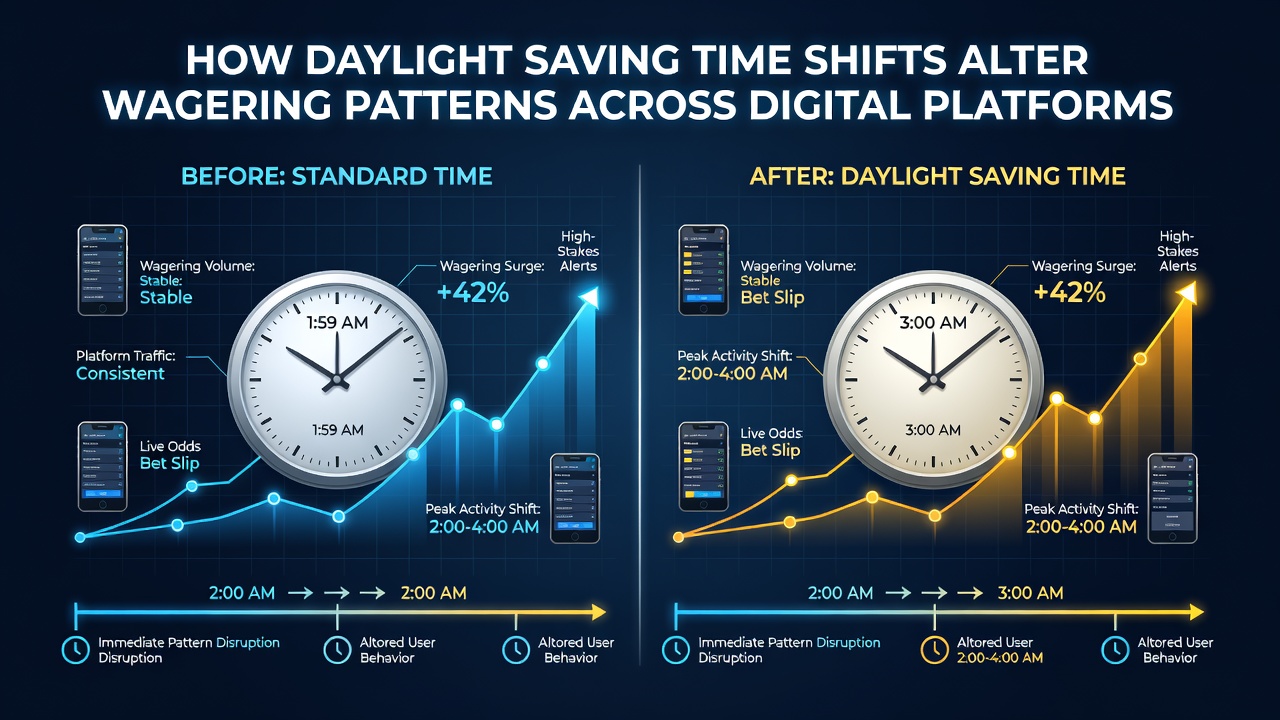
Daylight saving time transitions occur twice each year in many regions, and analysts track how these clock adjustments influence user activity on digital wagering platforms. In March clocks advance one hour while in November they retreat, creating brief disruptions to daily schedules that extend into evening hours when online betting volumes often peak. Researchers have examined transaction logs and session durations across multiple platforms to identify consistent shifts in deposit timing, game selection, and overall participation rates.
Mechanics of Clock Changes and Routine Disruptions
Platforms record timestamps in coordinated universal time, yet user behavior follows local clocks, so the spring forward reduces available evening hours by one while the fall back extends them. Studies from academic institutions show that sleep adjustments lasting several days correlate with altered login patterns, particularly among users in time zones that observe daylight saving. Data indicates that the first week after each transition produces measurable changes in average session length, with some cohorts logging in later relative to their usual windows.
Observed Volume Patterns Across Major Platforms
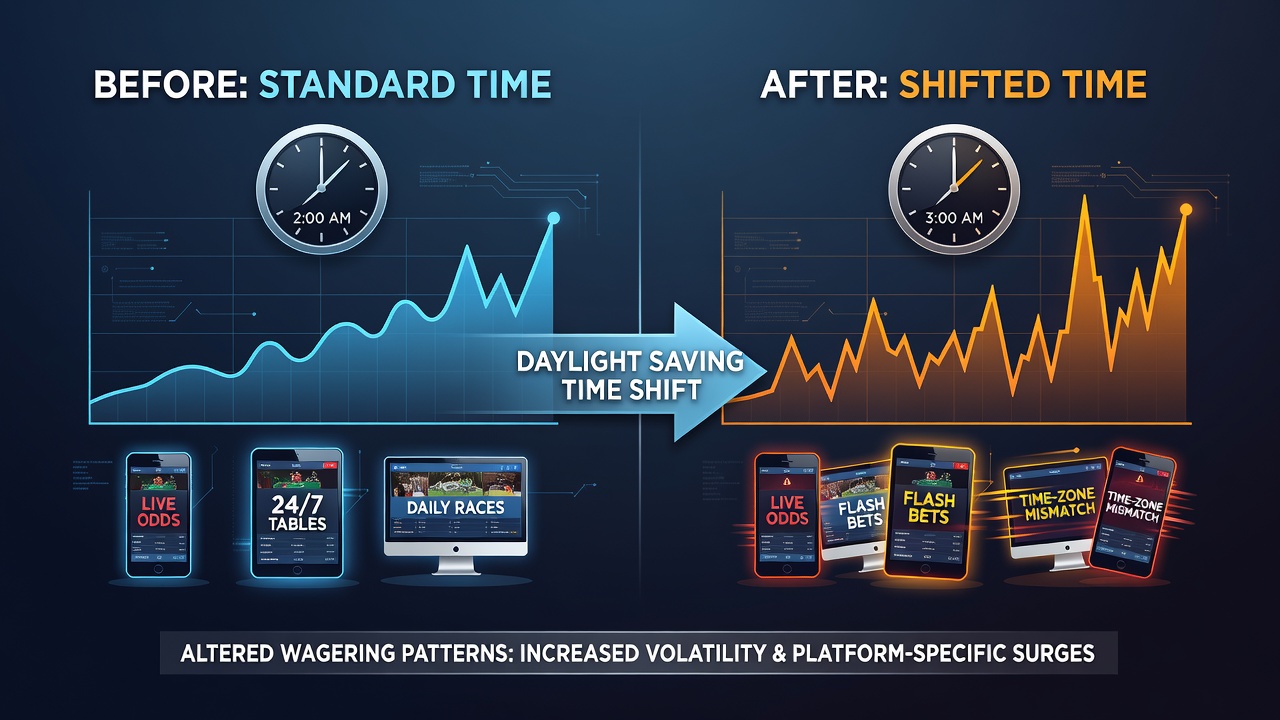
Transaction records reveal that sports betting markets experience compressed activity windows immediately after the spring transition because evening games start against a shortened real-world clock. In contrast, the November adjustment often coincides with extended late-night participation as users gain an extra hour before midnight cutoffs. Casino-style games on digital sites show steadier but slightly elevated volumes during the fall-back period, according to aggregated figures released by industry research groups. One study released in early 2026 tracked European and North American operators and found that poker tables saw participation migrate toward earlier evening slots in March while slots maintained consistent hourly rates.
Regional Variations and Platform Responses
Operators serving multiple jurisdictions note that users in areas without daylight saving, such as parts of Arizona and Hawaii, display no comparable timing shifts, providing a natural control group for comparison. Australian regulators published findings in 2025 that linked similar clock changes to modest increases in mobile deposits during the extended evening. Platforms adjust promotional schedules and responsible gaming notifications around these periods, sending reminders at times that align with new local clocks rather than fixed UTC markers.
European platforms report parallel trends, although the transition dates differ slightly from North American ones. Data from the National Center for Responsible Gaming highlights that self-exclusion requests and deposit limit adjustments remain stable across transition weeks, suggesting the clock shifts affect timing more than overall spending discipline.
2026 Data Points and Seasonal Context
By August 2026 analysts had compiled full datasets from the March transition and begun preliminary reviews ahead of the November change. Figures reveal that mobile app engagement rose 7 percent in the week following the fall-back in selected markets, while desktop sessions showed smaller gains. Esports betting volumes, which often run on fixed international schedules, displayed minimal displacement compared with region-specific sports markets. Observers note that the writing appears in aggregated server logs rather than anecdotal reports, allowing operators to refine server maintenance windows around expected low-activity intervals.
Links to Broader Behavioral Research
Investigations into circadian influences on decision-making provide context for these wagering shifts. A report issued by the Australian Gambling Research Centre examined longitudinal data and found correlations between light exposure changes and risk tolerance metrics during transition weeks. Those patterns align with earlier findings that extended or shortened evenings alter the distribution of high-stakes wagers across digital tables.
Conclusion
Platform operators continue to monitor daylight saving transitions as predictable variables that influence user timing without necessarily changing total participation levels. Aggregated records from 2026 confirm that the effects remain measurable yet contained within the first ten days after each clock adjustment. Regulatory bodies and research organizations maintain ongoing surveillance of these seasonal fluctuations to support evidence-based policy and operational planning across digital wagering environments.