Interface Redesign Ripples: Tracking Player Transitions to Lesser-Known Table Games After Platform Updates
Yves Albrecht · Aug 25, 2026
Interface Redesign Ripples: Tracking Player Transitions to Lesser-Known Table Games After Platform Updates
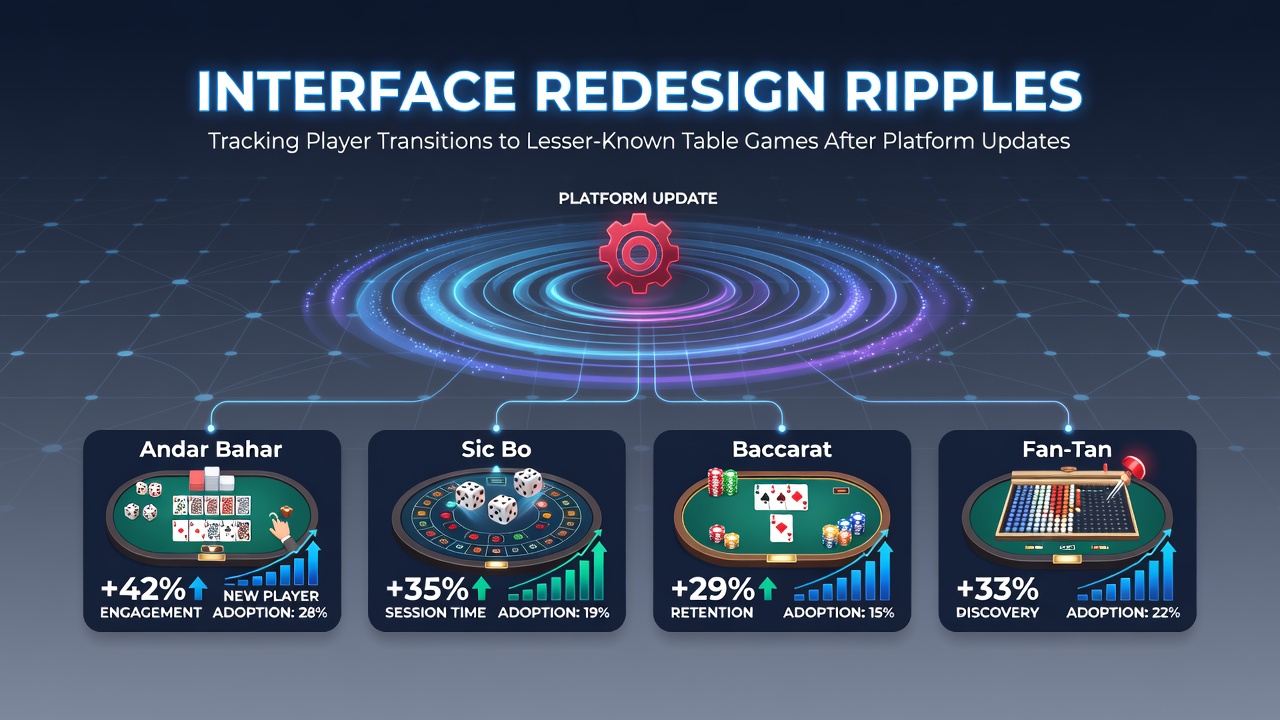
Platform updates in digital gaming environments frequently alter how users discover adn engage with table game offerings, and observers note that these changes often redirect traffic toward variants that previously received limited visibility. Data collected through the first half of 2026 shows measurable shifts in session distribution after several major operators refreshed their navigation structures, search functions, and recommendation engines.
Platform Changes and Visibility Adjustments
Operators rolled out redesigned lobbies during spring and early summer 2026 that reorganized game categories, introduced dynamic carousels, and adjusted thumbnail prominence for titles outside the core blackjack and roulette selections. Researchers tracking user flow observed that games such as Caribbean Stud, Let It Ride, and three-card poker variants gained increased exposure through these new layouts, while traffic to standard offerings remained stable or declined slightly in relative share.
Figures released by the Nevada Gaming Control Board indicate that total table game handle across licensed online platforms rose 3.8 percent between May and August 2026, yet the growth concentrated in mid-tier and niche variants rather than flagship titles. Analysts attribute part of this redistribution to interface modifications that placed secondary games in higher-traffic zones of the lobby.
Player Migration Patterns Documented in 2026
Session logs from multiple platforms reveal that users who previously limited activity to a narrow set of table games began initiating rounds on lesser-played options once those titles appeared in personalized recommendation modules. One longitudinal study conducted by researchers at the University of Nevada, Reno, followed 12,400 active accounts over eight weeks following a major interface overhaul and recorded a 14 percent increase in unique game trials among the cohort.
These transitions occurred without corresponding increases in marketing spend or promotional incentives for the specific titles, which suggests that placement and discoverability served as primary drivers. Players who encountered the games through updated menus or algorithm-driven suggestions showed higher retention rates on the new variants compared with control groups that navigated older interface versions.
Contributing Factors Beyond Simple Repositioning
Additional elements within the redesigns included improved filtering tools, quick-start previews, and contextual information panels that explained rules and payout structures for games many users had not previously explored. Industry reports compiled by the European Gaming and Betting Association noted similar patterns across several continental operators that implemented comparable updates during the same period, with baccarat side-bet variants and poker derivatives experiencing the largest relative gains.
Platform telemetry further indicated that average time spent on rules screens increased for these secondary titles, and subsequent play frequency rose steadily through August 2026. The data show that once players completed an initial session on a newly visible game, the likelihood of returning to that title within seven days climbed above the baseline observed for flagship offerings.
Measurement Approaches and Data Sources
Tracking methodologies combined anonymized account-level data with A/B testing of interface variants to isolate the effects of layout changes from other variables such as bonus campaigns or seasonal events. Observers emphasize that these measurement frameworks allow operators to quantify how small adjustments in navigation hierarchy translate into broader engagement across game portfolios.
Cross-referencing with transaction records confirms that deposit and wagering volumes associated with the newly prominent titles grew without cannibalizing activity in established categories, producing a net expansion in overall table game participation. Academic teams continue to examine whether these patterns persist beyond the initial three-month window after each redesign cycle.
Conclusion
Interface modifications implemented across major platforms in 2026 have produced observable redistribution of player activity toward table game variants that previously occupied lower positions in discovery rankings. Metrics from regulatory filings, university-led studies, and operator analytics converge on the conclusion that visibility adjustments alone can shift session allocation and broaden participation across game libraries. Continued monitoring through the remainder of the year will clarify whether these transitions stabilize into sustained engagement patterns or revert once novelty effects diminish.