NCPG Board of Directors Election Sets Stage for 2026 Leadership
Yves Albrecht · May 28, 2026

NCPG Board of Directors Election Sets Stage for 2026 Leadership
The National Council on Problem Gambling has released the outcomes of its 2026 Board of Directors election, and the results point to a volunteer leadership group that will assume roles beginning July 1, 2026. Five new members plus one returning director will take seats on the board, each contributing specialized knowledge in areas such as clinical treatment, advocacy, prevention, compliance, and responsible gambling operations. This composition directly supports the organization's mission to reduce gambling-related harm through national awareness and policy advocacy. The elected individuals bring documented experience across multiple sectors, allowing the board to address complex challenges in problem gambling prevention and support services. Those who have studied similar nonprofit governance structures note that such targeted expertise often strengthens strategic planning and program development at organizations like NCPG. The board itself functions as the primary decision-making body, guiding initiatives that reach communities, policymakers, and treatment providers throughout the United States.Strategic Role of the Incoming Directors
Board members will oversee long-term priorities including public education campaigns, legislative engagement, and partnerships with treatment facilities. Research indicates that volunteer boards with mixed professional backgrounds tend to produce more balanced approaches to harm minimization, particularly when compliance specialists collaborate with clinical experts. The 2026 cohort reflects this mix, positioning the council to respond to evolving regulatory environments and emerging data on gambling behaviors.
Election results were announced in the weeks leading into May 2026, giving the new directors several months to prepare before their formal start date. During this transition period, current board members continue to manage ongoing projects while facilitating knowledge transfer to the incoming group. Observers note that this overlap period helps maintain continuity in advocacy efforts and resource allocation.
Expertise Areas Driving Board Effectiveness
Clinical treatment specialists among the new members bring direct experience with evidence-based interventions for individuals affected by gambling disorders. Advocacy professionals contribute skills in policy development and stakeholder outreach, while prevention experts focus on community-level education and early intervention programs. Compliance officers ensure alignment with legal frameworks, and responsible gambling practitioners introduce operational insights from gaming industry settings.
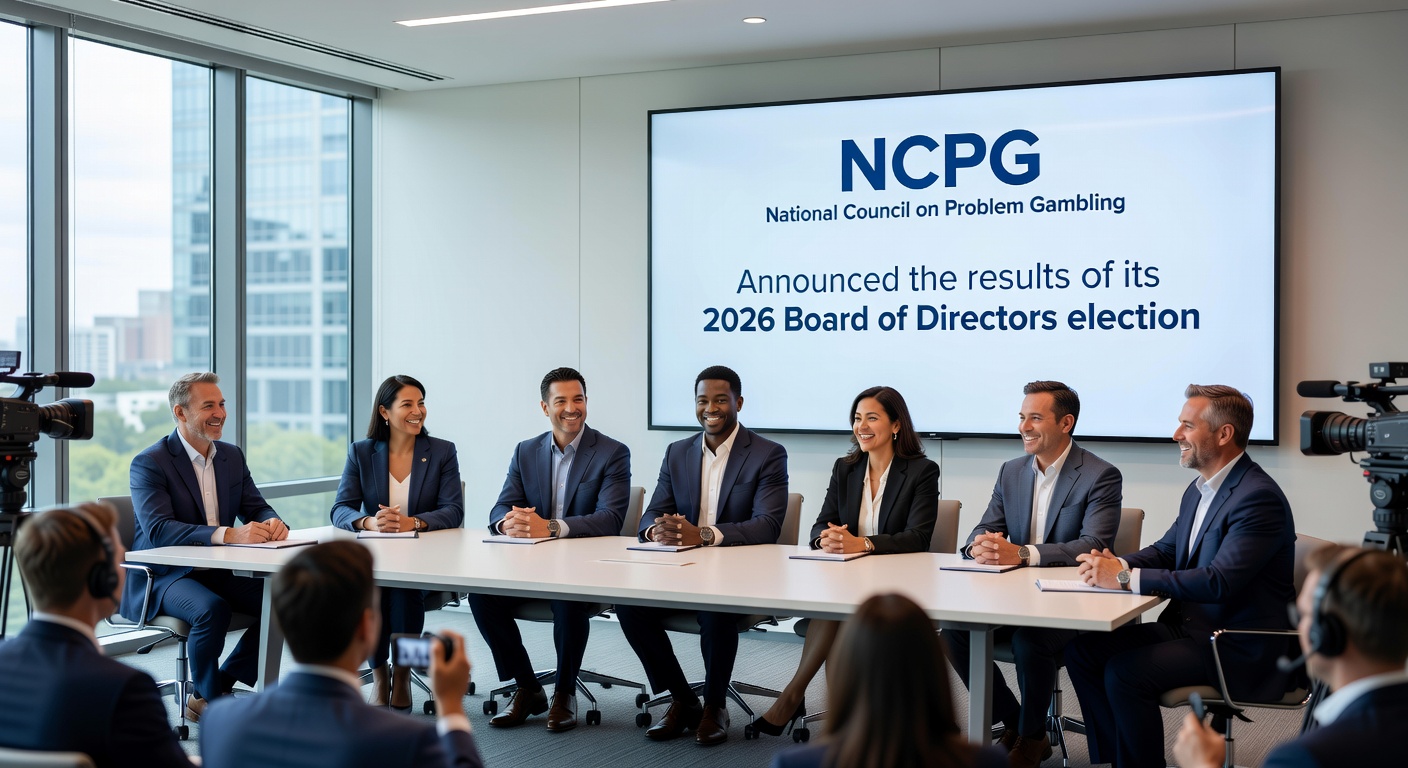
These combined competencies allow the board to integrate multiple perspectives when shaping organizational strategy. Data from similar national nonprofits shows that boards lacking this breadth sometimes struggle to address both individual treatment needs and broader systemic issues simultaneously. The NCPG structure avoids that limitation by design, according to information released alongside the election results.
Organizational Context and Continuity
The National Council on Problem Gambling operates as a national nonprofit dedicated exclusively to addressing problem gambling through research dissemination, public awareness, and support for affected individuals and families. Its volunteer board provides strategic leadership without compensation, a model that emphasizes commitment to the mission over financial incentives. The re-elected member brings institutional knowledge that helps preserve successful programs while integrating fresh approaches from the newly elected directors.
Those who've tracked NCPG activities over multiple election cycles observe that each board transition introduces incremental changes in focus areas without disrupting core services. The 2026 results continue this pattern, emphasizing expertise that aligns with current challenges in responsible gambling promotion and harm reduction. The organization maintains its emphasis on evidence-based practices, drawing from academic studies and field reports to inform board decisions.
Transition Timeline and Implementation
With the July 1, 2026 start date approaching, the new board members will participate in orientation sessions and strategic planning meetings during the spring and early summer. This preparation phase allows them to review existing initiatives, examine recent outcome data, and identify opportunities for program expansion. The staggered transition supports uninterrupted advocacy work at both state and federal levels.
Board service terms typically span multiple years, enabling sustained attention to long-term goals such as expanding access to treatment resources and strengthening prevention messaging. The combination of returning leadership and new perspectives creates conditions for both stability and adaptation, a balance that researchers have identified as valuable in nonprofit governance.
Conclusion
The 2026 Board of Directors election results equip the National Council on Problem Gambling with a leadership team whose collective expertise spans clinical, advocacy, prevention, compliance, and responsible gambling domains. This configuration supports the organization's ongoing work to minimize gambling-related harm through coordinated national efforts. As the July 1, 2026 transition date nears, the incoming directors will begin contributing to strategic decisions that shape future programming and policy engagement.
Additional details about the election and board composition appear on the organization's official site at ncpgambling.org. The council continues to publish updates on board activities and related initiatives as they develop.