The Hidden Rhythms of Circadian Cycles in Shaping Player Focus During Extended Virtual Table Sessions
Riley Walter · May 23, 2026

The Hidden Rhythms of Circadian Cycles in Shaping Player Focus During Extended Virtual Table Sessions
Virtual table sessions in online poker, blackjack, and similar games often stretch across multiple hours, and circadian cycles play a measurable role in how attention and decision speed hold up over time. These internal clocks regulate alertness through predictable rises and falls in core body temperature, cortisol, and melatonin, which in turn influence reaction times and risk assessment during prolonged play.
Biology Behind Daily Performance Patterns
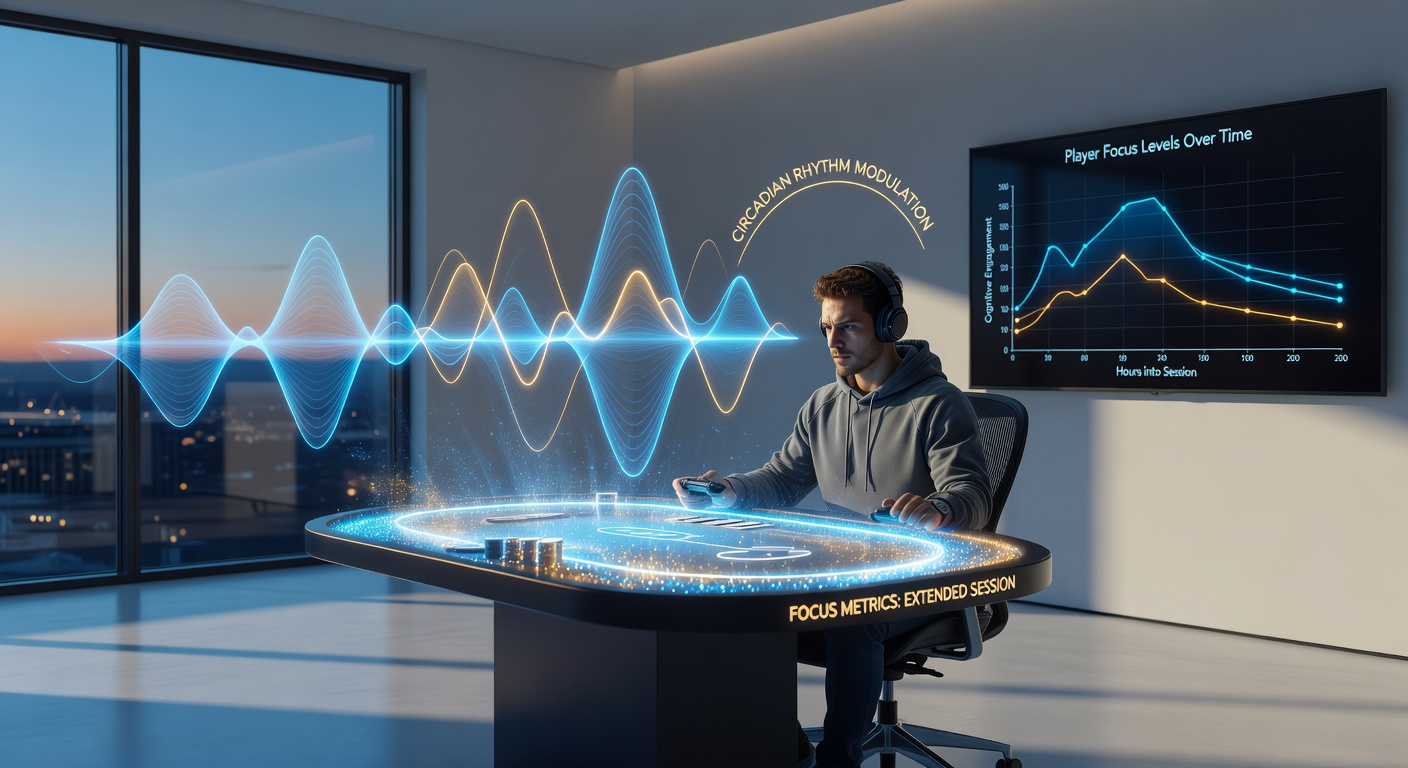
Researchers have mapped alertness peaks to roughly two hours after waking, with a secondary boost in the early evening, while a natural dip occurs in the mid-afternoon and another steeper decline between 2 a.m. and 6 a.m. Data from the National Institutes of Health shows that these oscillations continue even when external light cues are removed, which means late-night sessions coincide with rising melatonin levels that slow cognitive processing. Players who extend sessions past their usual bedtime therefore encounter measurable drops in sustained attention, a pattern documented across multiple laboratory studies of shift-work performance.
Effects on Virtual Table Decision Making
Extended sessions that cross into early morning hours coincide with slower information integration and increased variability in betting choices. Studies tracking eye movements during simulated card tasks reveal longer fixation times on individual cards after midnight, correlating with higher rates of missed pot odds calculations. Observers note that the same players maintain tighter ranges and steadier fold frequencies when sessions stay within daytime alertness windows, whereas post-midnight play shows wider variance in hand selection.
Industry reports from early 2026 indicate that peak concurrent users on major virtual table platforms occur between 8 p.m. and 1 a.m. local time across North American servers, placing many participants inside the descending phase of their personal circadian curve. European data collected through the European Sleep Research Society points to similar evening clustering, with session lengths averaging 3.2 hours longer on weekends when social schedules push bedtime later.
Recent Observations From Mid-2026
In May 2026, aggregated platform telemetry released by several North American operators showed a 14 percent rise in session duration compared with the same month in 2025, driven largely by increased mobile participation after 10 p.m. Analysts tracking these logs found that players logging in during the 3 a.m. to 5 a.m. window recorded average decision intervals 1.8 seconds longer than their own daytime baselines. Such differences accumulate across hundreds of hands and align with laboratory findings on sleep pressure and prefrontal cortex activity.
Interaction With Artificial Lighting and Screen Exposure
Blue-light emission from monitors and tablets suppresses melatonin onset by up to 90 minutes when sessions continue past habitual bedtime, according to controlled trials conducted at university sleep laboratories. This delay keeps players artificially alert for a period but also shifts their subsequent sleep onset later, creating a cumulative debt that appears in following sessions as increased error rates on simple probability judgments. Operators that introduced night-mode screen filters in 2025 reported modest reductions in average session length among users who enabled the setting, though total engagement volume remained stable.
Geographic and Demographic Variations
Players in time zones with later sunset, such as those in western Canada during summer months, show different clustering of long sessions compared with eastern U.S. counterparts. Australian regulatory filings from the same period document higher late-night participation rates among shift workers whose work schedules already misalign with standard circadian timing. These patterns suggest that individual chronotype, rather than clock time alone, determines when focus erosion becomes statistically detectable in hand histories.
Conclusion
Circadian cycles impose measurable constraints on sustained focus during extended virtual table sessions, with performance metrics shifting in line with established alertness curves. Platform data collected through 2026 continues to map these rhythms onto player behavior, revealing consistent timing effects across regions and demographics. Understanding the biological timing of cognitive resources therefore supplies context for observed variations in session outcomes without requiring changes to game rules or platform design.